Author
In this project, “Avaya” is simply another name for Earth. In addition, “Luna” replaces “the Moon,” and “Sol” replaces “the Sun.” The rest of the solar system is more or less identical, but the planets have different names.
Avaya’s biosphere and other attributes (i.e. diameter, orbital direction, etc.) are identical to Earth’s (excluding continents and other landmasses, which are unique.)
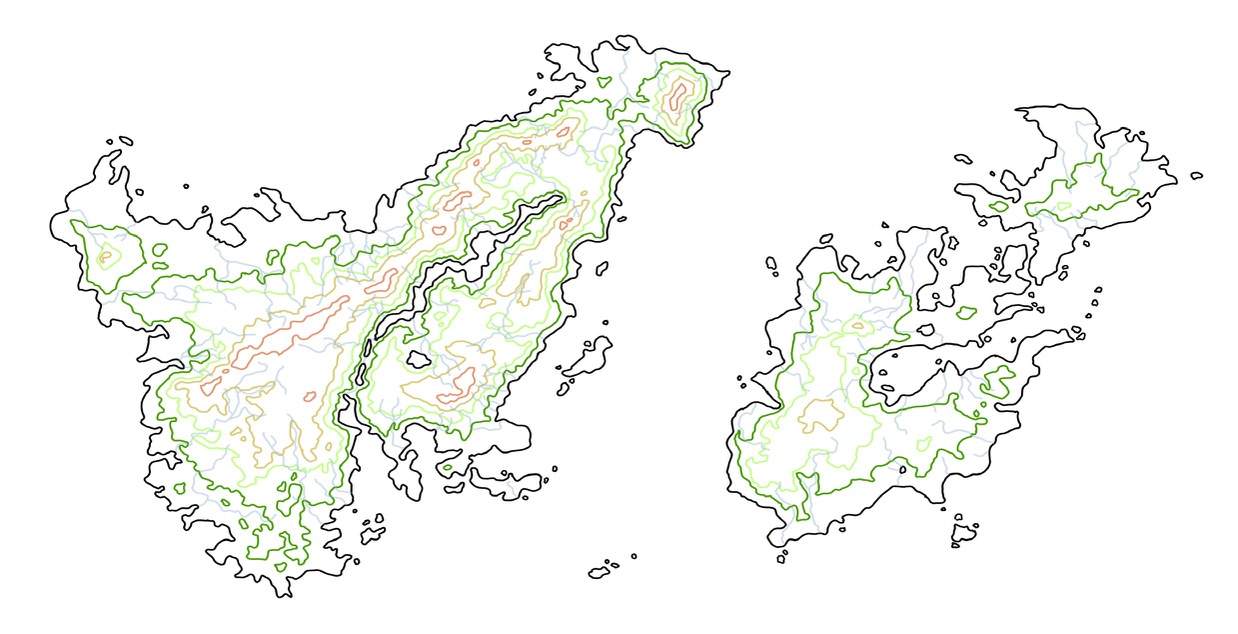
A relief map of Avaya’s two major continental groups, the West and East Ayas.
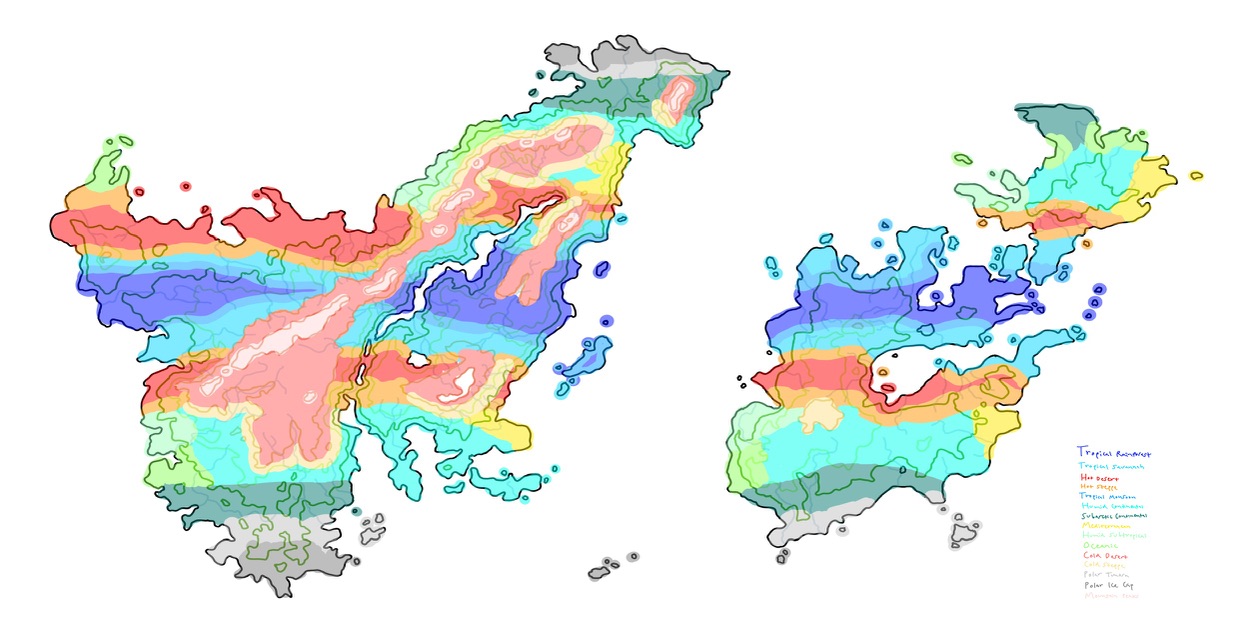
A climate map of Avaya, featuring ocean currents as well.
Avaya is the third planet from Sol and the only astronomical object known to harbor life. This is enabled by Avaya being an ocean-dominated world; it is the only planet in the solar system sustaining liquid surface water. Almost all of Avaya’s water is contained in its global ocean, covering 70.8% of Avaya’s crust. The remaining 29.2% of Avaya’s crust is land, most of which exists as continental landmasses within Avaya’s land hemisphere.
Most of Avaya’s land is at least somewhat humid and covered by vegetation, while large sheets of ice in Avaya’s polar deserts retain more water than the combined amounts of Avaya’s groundwater, lakes, rivers, and atmospheric water.
Avaya has one permanent natural satellite, Luna, which orbits Avaya at 384,400km and is roughly a quarter as wide as Avaya. Luna’s gravity helps stabilize Avaya’s axis, causes tides, and gradually slows Avaya’s rotation. Tidal locking has made Luna always face Avaya with the same side.