Overview
The Secretariat-Directory, often referred to as the Directory, and chronologically the 20th Directory of the Secretariat of the Rosen Commonwealth, is a council of elected senators that exercises the executive powers of the state. The Directory elects the office of the Secretary-General, who de jure functions as the head of state and government of the Rosen Commonwealth.
While the Secretary-General is constitutionally imbued with a very high degree of power, much of the actual decision-making is left to the Directory, which relies on the Secretary-General to carry out its resolutions.
The Secretariat-Directory oversees the cabinet. While each senator is assigned departments to oversee, the actual running of the departments is left to cabinet members.
The Secretariat-Directory is currently in its 20th iteration. It is chaired by Roberto Araújo-Thomasson, whose term as Secretary-General expires on the first day of 2061.
Members of the Secretariat-Directory are referred to as Secretaries.
Current Secretaries
| Minister Role(s) | Department(s) Office(s) | Took Office Status |
|---|---|---|
| Roberto Araújo-Thomasson Directory Chair Secretary-General | N/A | January 12th, 2053 Incumbent |
| Adelaide Douglas Deputy Secretary-General | Department of Foreign Relations Office of Communications Office of International Image and Perception Office of the Cabinet Office of Intergovernmental Organization Relations | January 12th, 2053 Incumbent |
| Sozea Uyemura | Department of Justice Office of Auditing Office of Anti-Corruption and Ineffective Governance | January 12th, 2053 Incumbent |
| Daniel Pelc | Department of Finance and Economics Office of the Treasury Office of Financial Aid and Loans | January 12th, 2053 Incumbent |
| Selam Malomo | Department of Health, Labor, and Welfare Office of Trade Union Relations Office of Socialist Policy | January 12th, 2053 Incumbent |
| Joel Castro-Miranda | Department of Education, Culture, and Science Department of Internal Affairs Office of Internet Regulation and Safety Office of Interdepartmental Collaboration Office of Youth Outreach Office of Space Policy | March 22nd, 2053 Acting |
| Laurite Fischer | Department of Agriculture, Energy, and Conservation Office of Nuclear Weapons Office of Nuclear Fusion Office of National Parks and Reserves | January 12th, 2053 Incumbent |
| Pamela Łukowska | Department of Defense Office of Aerospace Defense and Control Office of Counterterrorism Office of Conscription and Recruiting Office of CADO | March 22nd, 2053 Acting |
| Xian Yaling | Department of Transportation and Tourism Office of Railways Office of Ports and Harbors | January 12th, 2053 Incumbent |
Operation
Secretary-Generalship
When a new Secretariat-Directory begins its administration, it elects a Secretary-General to preside as head of government and state for the duration of the Directory’s term. A similar but more administrative role, the Directory Chair, is rotated yearly. The Directory Chair manages the agenda and leads the operations of the Directory.
The Secretary-General is nominally the highest official within the Rosen Commonwealth and is empowered with representing the Commonwealth and setting foreign policy as head of state, setting its priorities and economic, political, and social goals as head of government. In actuality, the Secretary-General is primus inter pares; powers are distributed among the whole directory and the Secretary-General holds little true political power.
However, when the Directory is unable to convene (such as in the event of war or another major crisis), the Secretary-General may act within their powers to represent the Directory as one body.
Membership
While it may be tempting to believe that the Secretariat-Directory functions as a combined executive and cabinet, this is not true in practice. While each member within the Directory represents a department within the government, they rarely directly administrate these departments, leaving truly day-to-day administration to the undersecretaries that make up the cabinet. Technically, all decisions made by the Directory are subject to the Secretary-General’s approval, but this practice is deemed so unnecessary that the Secretary-General no longer officially approves the Directory’s decisions.
Members of the Directory, called Secretaries and colloquially known as “Heads” are imbued with significant political power and are considered the most powerful people in the Commonwealth. Overseeing departments and offices, each member sets individual priorities for their departments along the advice of their colleagues and the Secretary-General.
Members are given access to private aircraft and priority railcars, and are permitted to reside in any residence of their choosing1.
Meetings
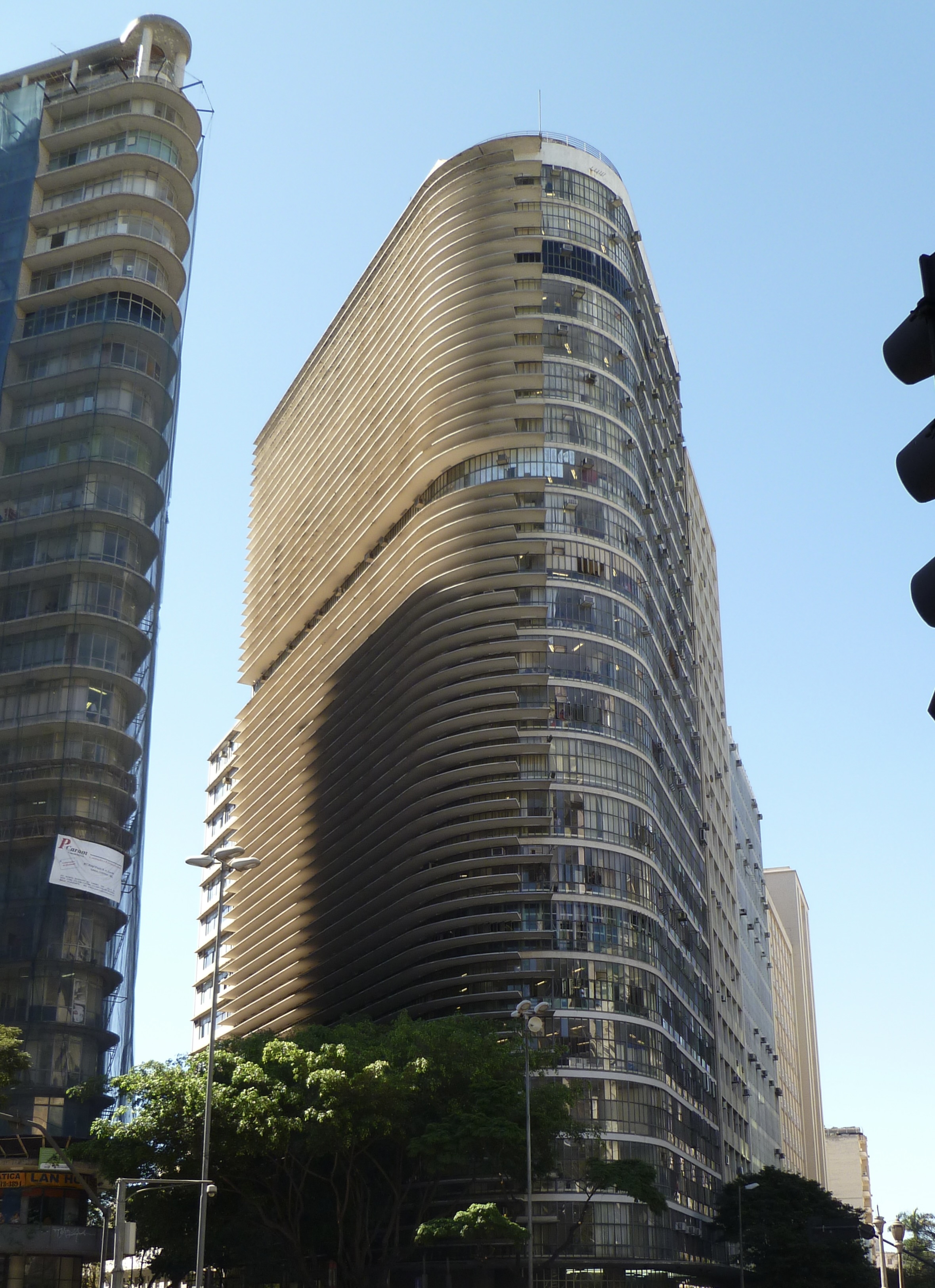
The Deng Liang Secretariat Building, São Cedillo. The Directory meets in the basement, but administrative offices and secondary meeting rooms are housed in the higher floors.
The Secretariat-Directory has no limit on how frequently it must meet, but it normally convenes for standard meetings on Tuesdays and Fridays. These meetings are held at the Deng Liang Secretariat Building in São Cedillo, where members of the Directory usually live.
Apart from the nine Heads, the government chief of staff and the official spokesman for the Directory also attend meetings. They do not have votes but are able to advise the Directory with the same authority as the other members.
During meetings, Members are expected to address each other formally (i.e. Mrs. Yaling, Mr. Fischer) even though they are usually on first name terms with one another. In fact, it is often for the Heads to become close, and many former members, such as Diego Campos, continued to meet with their former colleagues as personal friends for many years after their term had ended. The practice of formal address is intended to separate items on the agenda from the person promoting them.
After meetings, the Heads usually eat dinner with each other at the Secretariat Building or at a local restaurant. The Directory also meets in conclave to discuss specific or sensitive topics at length. The Directory also collectively manages a vacation house in Stocklach-Hallenstein, which it visits annually.
The Directory meets in secrecy, and records of meetings, such as transcripts, commentaries, and minutes, are not disclosed until twelve years after the end of the Directory’s turn. Under non-partisan democracy, this practice is done in order to ensure easier consensus and to preserve the collegiality and political independence of the Directory’s members.
Responsibilities
Each member of the Secretariat-Directory is the head of one or more departments, and may also administer offices as well. Departments are nominally led by the member’s undersecretary who acts on the advice of their respective Head. Offices report directly to the Secretariat-Directory, and aren’t devolved like departments. Members are not expected initially to be experts in the field of the departments they cover, since, again, true leadership is devolved.
The Secretariat-Directory’s primary responsibility is approving or denying law passed by the Senate. The Secretariat-Directory may also initiate legislation in the form of directives, but this practice is uncommon, and the Directory usually makes recommendations on passed legislation instead. The Secretariat-Directory sets broad economic and diplomatic policy for the Commonwealth, which the country is expected to carry out. The Directory is also responsible for negotiating, signing, and enforcing treaties signed with foreign governments.
If a member of the Directory is found to have committed a crime or abused their power, they can be removed by either the Secretariat-Directory or the Senate, if the Directory first chooses not to act.
Major decisions are usually settled with the advice of the cabinet, and sometimes with other officials or figures in attendance. This body is informal but has come to be known as the “Supreme Secretariat.” In addition, even if a referendum is not requested on a law, the Secretariat-Directory may initiate one anyway, without the approval of the Senate. In cases of intense disagreement with the Senate, this power can be used to undermine its authority in hopes the population will support the Directory over the legislature.
Convention
Members of the Secretariat-Directory have a numerous number of informal conventions to uphold. One of the most important of these conventions is maintaining collegiality, meaning members are expected to consistently support the actions of the Directory, and aren’t permitted to publicly criticize the Directory and their colleagues. This can often conflict with the member’s political views, such as the case of Frederick Shanway, who was removed by the Directory in 2038 for continual breaking of tradition, violating the Directory’s policy of complete secrecy, and frequent public outbursts.
Elections
The Secretariat-Directory is selected by the Senate in two separate elections. Every senator is eligible to run for the departmental offices, of which there are eight of. When elections end, a second election begins to select the Secretary-General. The winning candidate for the Department of Foreign Affairs automatically becomes the Deputy Secretary-General.
After both elections conclude, the new Secretaries are sworn in by the previous officeholders, taking the oath of office and pledging allegiance to the Commonwealth. From this point onward, they accept their new duties and the previous officeholders rescind theirs.
Footnotes
-
Members usually live in Sasei prefecture, as it is where São Cedillo is located, which is convenient for the Secretaries. ↩